The Issue
Canada has the discretionary decision-making power to bring down GHG emissions to align with the promises made in the Paris Agreement. For example, by implementing environmental assessment legislation that would apply conditions on approval of high GHG-emitting projects, Canada has the potential to meet its climate commitments. So, why aren’t they?
Canada is bending over backward to emission-polluting industries for profit over the planet, causing sea levels to rise, forests to burn, and glaciers to melt. Government inaction is affecting all of us now, particularly for Indigenous Peoples who are trying to protect their rights and territories from the worst of climate change.
What’s at risk for the Wet’suwet’en and us all?
We’re already seeing the devastating outcomes of climate inaction across the globe. Extreme weather events, devastating wildfires, and diminishing diversity in ecosystems to name just a few.
Some of the highest observed and projected temperature increases across the globe are happening in northern Canada winters. This leads to more frequent floods, reduced snowpack, less predictable stream flows, temperature and nutrient regimes, and shifts in salmon distribution and productivity.
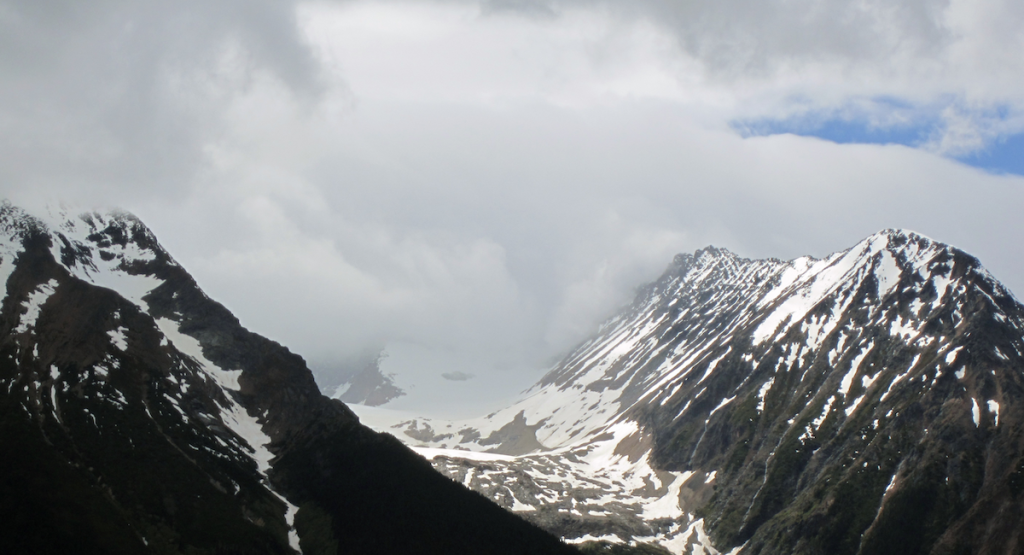
Already, the Wet’suwet’en have experienced significant warming effects on their territories. These effects include pine bark beetle infestations, forest fires, and significant salmon population declines, all in part attributable to climate change. Past and current clearcut logging and land-clearing practices will exacerbate these climate effects. Forest cover reductions will, in turn, lead to lower populations of fur-bearing animals and culturally significant food animals, such as moose and fish.
Wet’suwet’en, like most communities and Nations across the world, are experiencing disruptions to their ways of life due to climate change. Community members have stopped or reduced fishing for their preferred salmon species for over two decades because of climate change. They are doing everything they can to protect their rights and territories, but rising temperatures threaten their cultural identity, their stewardship practices with the land and the life on it, and their food security.
Legal Action and Indigenous Law
Misdzi Yikh v Canada is being brought forward in accordance with Wet’suwet’en’s own legal orders, which state a House group is responsible to other Wet’suwet’en, to other peoples, and to the spirit in the land for all acts on its territories. This Wet’suwet’en law, rooted in relational stewardship, means that the Houses are taking responsibility for large fossil-fuel infrastructure projects that are being built across their territories and the impacts that unchecked resource extraction have on climate change.
In this legal action the Likhts’amisyu Clan Chiefs are seeking:
- Declarations that Canada has a constitutional duty to act consistently with the Paris Agreement to keep its emission levels in keeping with a 1.5 ̊C and 2 ̊C global temperature rise (“Temperature Commitment”);
- An order declaring that Canada has breached and continues to breach its constitutional duty to act consistent with its Temperature Commitment;
- A declaration that Canada has unjustifiably infringed and continues to unjustifiably infringe on the Likhts’amisyu members’ rights under s. 7 of the Charter, including the s. 7 rights of future members of theWet’suwet’en, by failing to act and take the necessary legislative steps required to manage Canada’s greenhouse gas emissions in a manner that would meet the Temperature Commitment;
- An order requiring Canada to amend its statutes and its decisions under them (see the Statement of Claim section to see list of relevant legislation) to make them consistent with the Temperature Commitment. This includes amending each of its environmental assessment statutes that apply to currently high greenhouse gas emitting projects so as to give the Governor in Council the discretion to cancel or vary the terms of Canada’s operational approval under any of those statutes if Canada is demonstrably not able to or does not meet its Temperature Commitment, or if Canada determines global warming to be a national emergency;
- An order requiring Canada to provide a complete, independent, and timely annual account of Canada’s cumulative greenhouse gas emissions, including emissions produced within Canada and emissions produced outside of Canada but imported into Canada in the form of tangible goods, in a format that permits Wet’suwet’en to compare these cumulative GHG emissions with Canada’s fair carbon budget to meet its Temperature Commitment;
Canada has deprived and continues to deprive the Likhts’amisyu Houses’ members of their right to life, liberty, and security of person by making and continuing laws that facilitate the development and operation of high GHG-emitting projects. Canada’s fair contribution to keep global warming to non-catastrophic levels is not being achieved.
Canada, by its conduct and its failure to discharge its obligation to adequately meet its Temperature Commitment, has and continues to knowingly cause, contribute to, and exacerbate the impacts of climate change. This lack of commitment is depriving the Wet’suwet’en, their members, and their future members of their constitutionally guaranteed right to life, liberty, and security of the person under s. 7 of the Charter.
Although the Likhts’amisyu are holding Canada accountable for activities occurring on their territory — climate change is a threat to us all. We are all one planet. Donate now to support their legal action that aims to reshape Canada’s failing approach to the climate crisis.