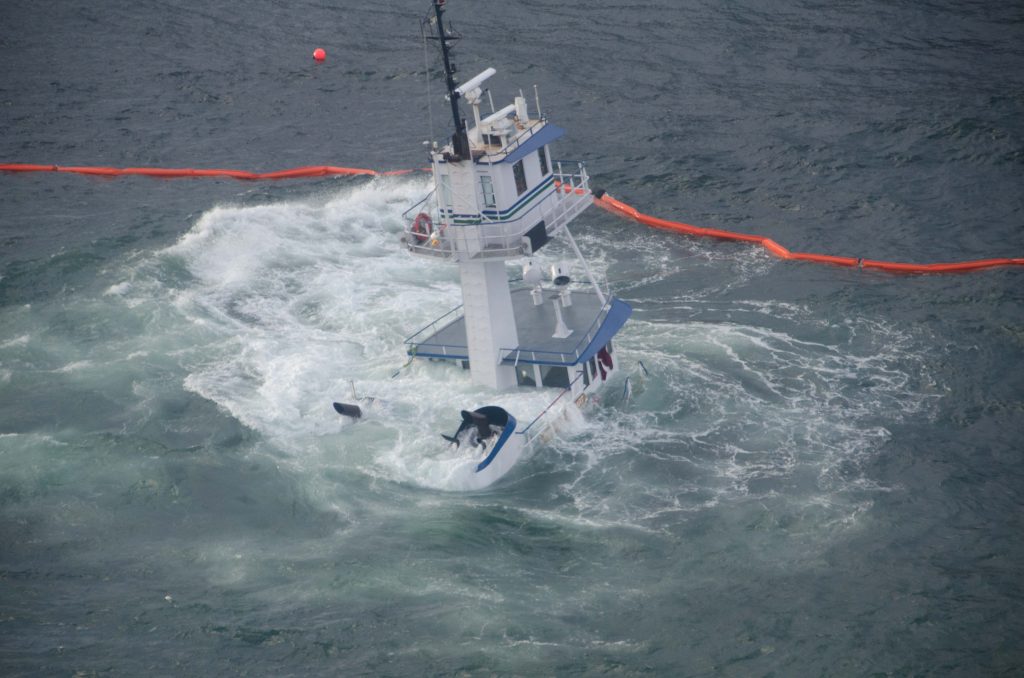
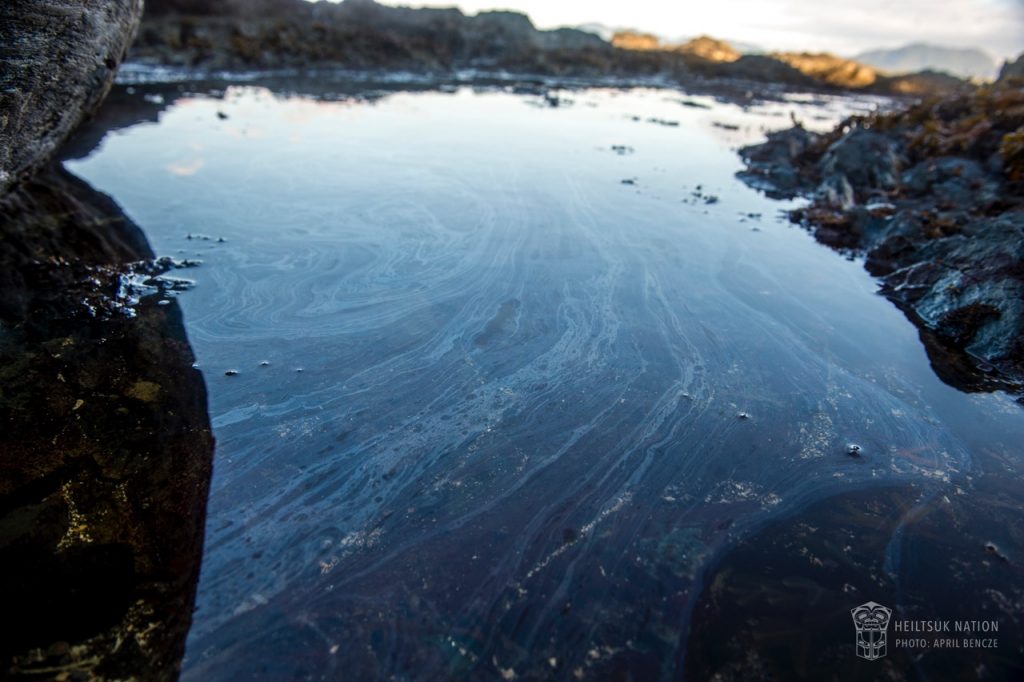
On October 13, 2016, the tug Nathan E. Stewart ran aground in Seaforth Channel in Heiltsuk territory and sank. The tug spilled over 110,000 litres of diesel oil at the mouth of Gale Creek and into the waters, adjacent to an ancient Heiltsuk village site and Heiltsuk marine harvesting area.
The Heiltsuk filed a Notice of Civil Claim on October 13, 2018.
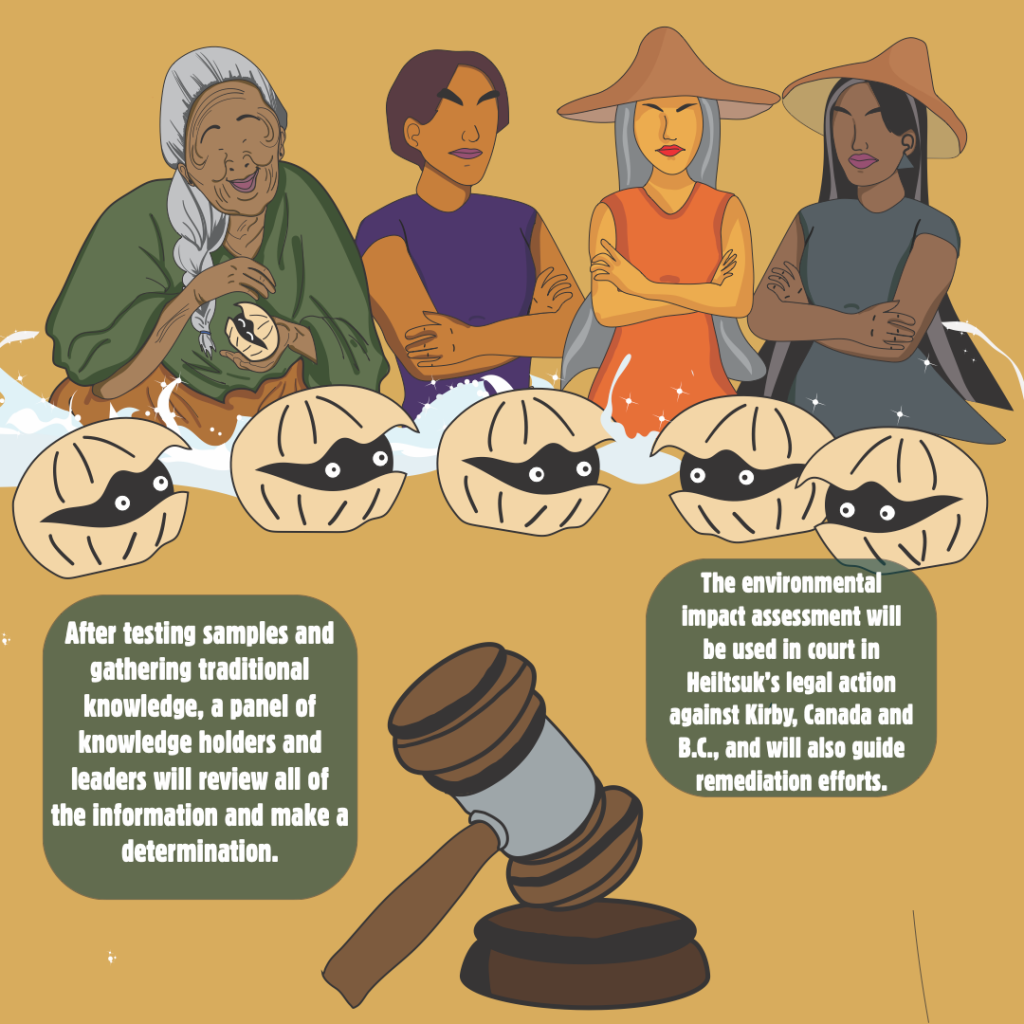
The Heiltsuk are suing the owner of the tug, Kirby Corporation, and the governments of Canada and B.C. Their case seeks to challenge the constitutionality of Canada’s oil spill response; compensate the Heiltsuk for cultural and economic losses due to the spill; and establish Heiltsuk Aboriginal title to reserve lands, near-shore and seabed in Seaforth Channel and surrounding areas.
The case will see the Heiltsuk raise the lack of consultation regarding oil shipments plying Heiltsuk waters, and especially vessels without pilots. Though the Heiltsuk have repeatedly expressed opposition to tanker and condensate shipping through their waters, they were never consulted by the federal government about the Nathan E. Stewart transporting oil through their territories or doing so without pilots. The federal government ignored Heiltsuk opposition – their withdrawal of Free, Prior and Informed Consent – and now will be brought to court to acknowledge this failure and the costs to the Heiltsuk.
This tragedy is the direct result of the federal government failing to fulfill its constitutional duty to the Heiltsuk. It must stand as a warning for the future: lest it happen again.
A win for the Heiltsuk could:
- Toughen oil spill regulations along the whole Pacific coast
- Strengthen Heiltsuk jurisdiction so they can manage their territory according to Heiltsuk laws
- Set legal precedents for:
- Aboriginal title to the foreshore and seabed
- Aboriginal governance rights that protects the ecosystem and its resources
- BC and Canada to be required to consult with Indigenous peoples on the environmental impact assessment and remediation following an oil spill
- Deterrence of oil spills by establishing cultural damages.