Every year on World Water Day, we are invited to pause and reflect on the importance of water. This year, the United Nations World Water Day theme is Water and Gender, focusing on the crucial need to center women’s voices, leadership, and rights in water management. Women around the world are disproportionately affected by issues like access to water and water pollution, largely because of historic inequalities and responsibilities assigned to them, often without choice.
Indigenous women have long protected the water because of a deep responsibility rooted in culture, ceremony, and security of life and health. In Athabasca Chipewyan First Nation, water is more than a resource—it is a gift, it is a relation, and with that comes the responsibility to protect it. At the heart of these water protection efforts, there are many inspiring women taking the lead.
What Happened to the Water?
From May 2022 to November 2023, there were three uncontrolled discharges of industrial wastewater at the Kearl Facility, operated by Imperial Oil, in Athabasca Chipewyan First Nation’s territory, resulting in over 5.3 million liters of toxic tailings and 670,000 liters of other contaminated water being released directly into the territory. To put this into perspective, that’s the equivalent of about 2 Olympic-sized swimming pools. The uncontrolled discharges of tailings by Imperial Oil continue to have devastating impacts on the territory and the community that depends on it. While the Kearl Facility is responsible for the tailings and contamination, the Alberta Energy Regulator—a body of the provincial government—exists to regulate and prevent these kinds of risks to the land, water, people, and all living things that contribute to thriving ecosystems. The Alberta Energy Regulator was supposed to protect the public—including Athabasca Chipewyan First Nation, but they failed to communicate the toxic discharges to those whose water was impacted. Athabasca Chipewyan First Nation is taking legal action to hold the Energy Regulator accountable as a result.
The Women Water Stewards of Athabasca Chipewyan First Nation
Last September, the RAVEN team was honored to attend the inaugural Decolonizing Land and Water Summit, hosted by the Athabasca Chipewyan First Nation, where Indigenous leaders, grassroots community organizations, and larger NGOs came together to showcase Indigenous-led solutions that restore sovereignty of their traditional territories and reaffirm their duty as land and water stewards. While at the conference, we got the opportunity to meet and chat with some amazing women from the Athabasca Chipewyan First Nation community, working to enforce Dené laws to protect the land and water from cumulative impacts.
“Our main concern for water management is that people are not taking us seriously and they’re not listening to us” — Lori Cyprien
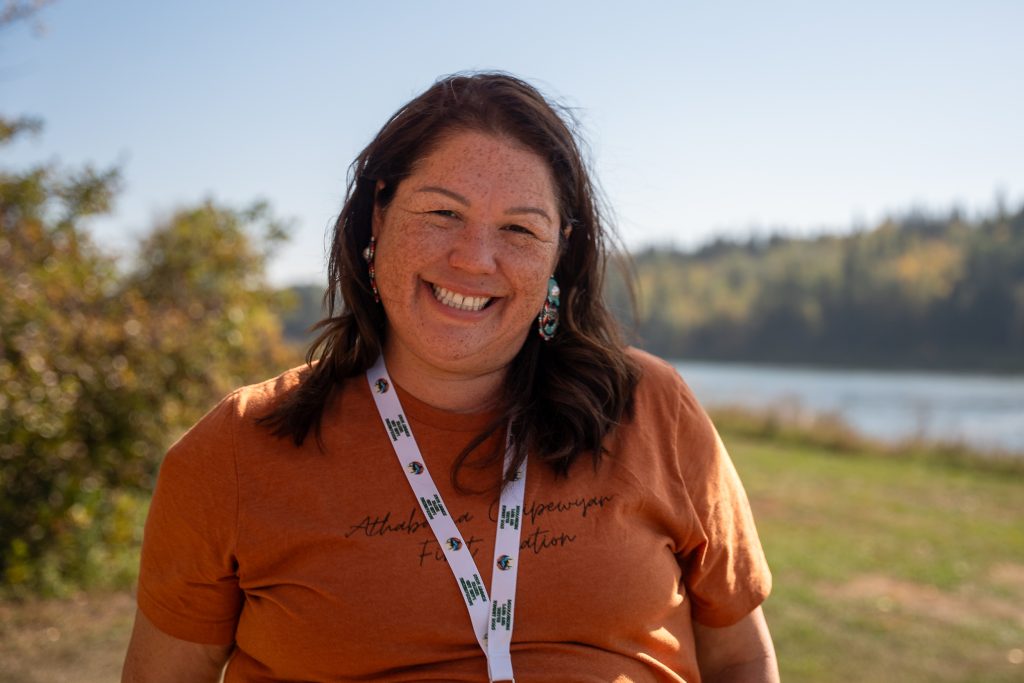
Lori Cyprien, Executive Director of Athabasca Chipewyan First Nation’s Dené Lands and Resource Management. Photo by Karissa Chandrakate
Lori is the Executive Director of the Dené Lands and Resource Management department of Athabasca Chipewyan First Nation. The organization was established so that the First Nation can work with industry and government to assess the environmental impacts of industrial development on the Athabasca Chipewyan First Nation territory. She is a proud member of Athabasca Chipewyan First Nation, dedicated to protecting the lands and waters in her territory.
“Justice for [Athabasca Chipewyan First Nation] would be having true Indigenous leadership in their [Alberta Energy Regulator] board and having Indigenous stewarded policies embedded in the way that they operate.” — Callie Davies-Flett
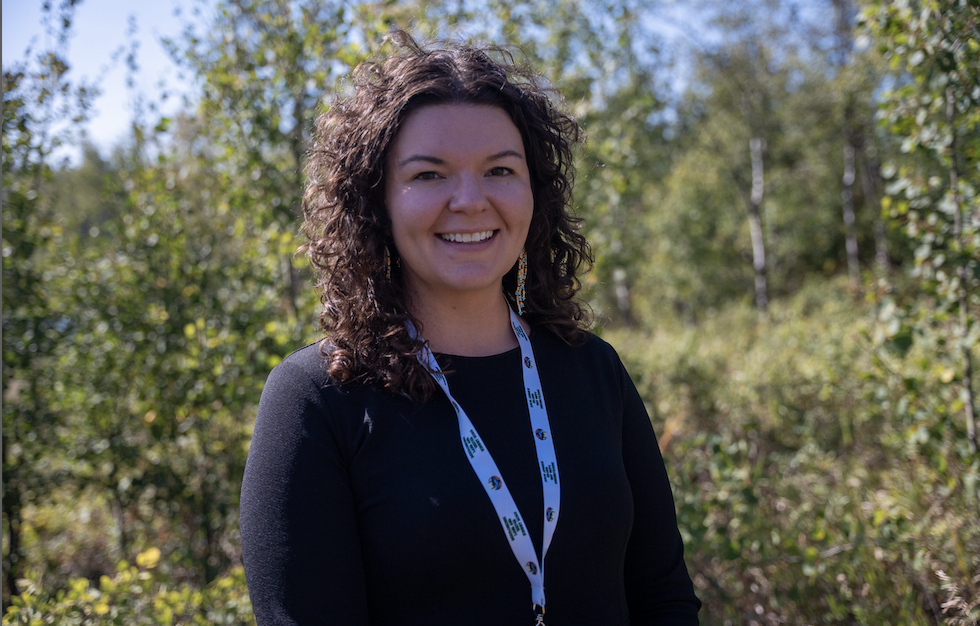
Callie-Davies Flett is the Regulatory Advisor at the Dené Lands and Resource Management department of Athabasca Chipewyan First Nation. Photo by Karissa Chandrakate
The Role of Women and Matriarchs in Dené Lands and Resource Management and Community
We asked both women about the work they do at the Dené Lands and Resource Management and to give us more context about the roles that women and matriarchs play in protecting water in their community.
Q: What roles have women played in protecting water and decolonizing water management in your organization?
Women have led the charge in water protection in Athabasca Chipewyan First Nation Dené Lands Resource Management. From its inception, Dené Lands Resource Management has been steered by women in executive leadership positions and incredible women on our board of directors and elected leadership. Our community has partnered with other First Nations and a team of scientists in the region to create our Water Quality Guidelines for Indigenous Use. These criteria were created, researched, vetted, and distributed by a women-led research team.
Q: How important is Water Quality and Quantity to you and your community – especially in the context of the roles and responsibilities of matriarchs?
Our community is fortunate to have our traditional land mostly intact to carry on our traditional way of life. Other First Nations in Canada must practice their Treaty Rights in farmers’ fields or in the middle of industrial development. Our traditional way of life is dependent on water levels and the ability to hunt, fish, and trap in Lake Athabasca and places on or near the Athabasca River. In our community, women carry out the tradition of dressing our traditional harvest, and that ability to provide for our families diminishes if our food sources are scarce and limited. The community of Fort Chipewyan is downstream from the Oilsands, and our grandmothers have played a crucial role in advocating for the right to clean water. Protecting our people is first and foremost for most of our grandmothers and elders. Our Elders Advisory Board is made up of fierce protectors of the land and water, and the women on that board never falter in speaking up and speaking out to government officials and industry proponents to protect our water.
Q: Are there any stories or teachings from the river you can share that add to your understanding of your own role as a water protector?
In the earlier days, water connected the people; it was essential in our transportation. This was the only way to keep connected with family and friends and assist in transporting important foods. When you look and learn the ways of the water, the way the channel carries itself, calm at times, swift at times, but always confident in its movement, always moving ahead. The water leads by example; the water shows us that we need to carry on, even in times of hardship. This is why our people will continue to fight to protect it. Water brings us together, shows us how to keep strong. Water is life.
When it comes to water protection, women can be seen at the forefront of advocacy campaigns, rallies, and global forums. They carry deep inherited knowledge and traditions that are central to relationships with the land and waters, and their caretaking values and practices are often at the heart of their communities. We are so honoured to work alongside these amazing women of Athabasca Chipewyan First Nation. Learn more about their work at Dené Lands and Resource Management and donate to their legal challenge at www.raventrust.com/acfn