West Moberly First Nations has entered into a settlement related to the Site C portion of West Moberly’s civil claim for infringement of Treaty 8. West Moberly has been actively opposing the Site C Project and hydroelectric expansions on the Peace River for decades. Our community has fought for our rights, culture, and principles, forgoing economic and financial benefits from the Site C dam. Unfortunately, the construction of Site C has progressed to a point where it is very unlikely that any judge would order the dam dismantled. Because of this, West Moberly has reluctantly agreed to settle the portion of their case related to the Site C project.
We thank all the amazing donors who have supported West Moberly so much generosity, passion and heart.
“Just go somewhere else”
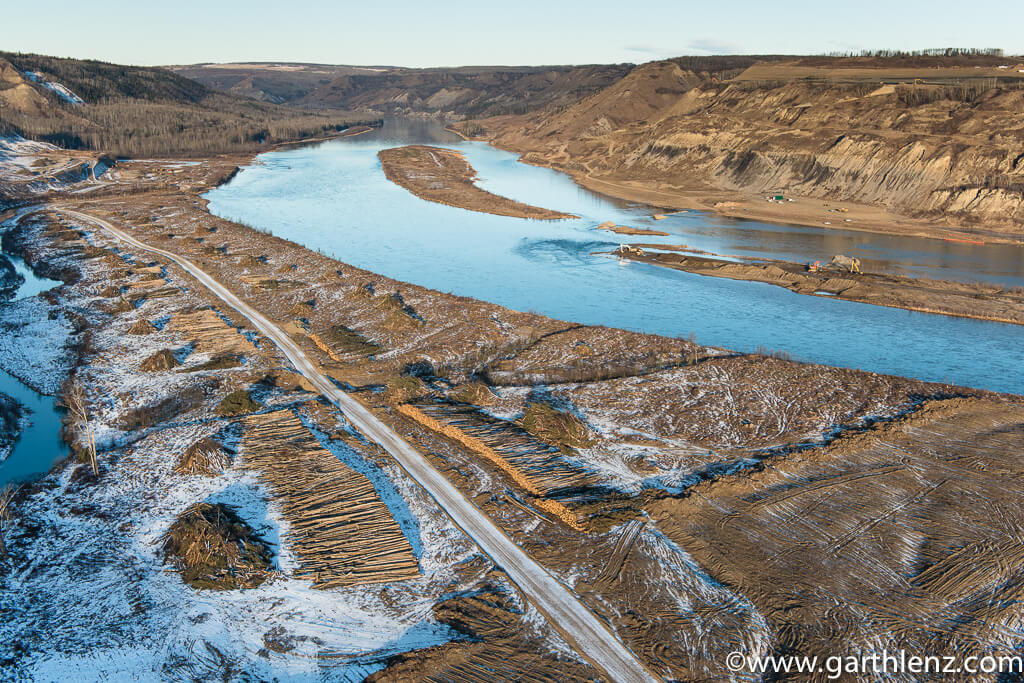
Site C dam, the costliest public project in B.C.’s history, threatens to eliminate the last portion of the Peace River, which is the main artery of West Moberly’s traditional territory. Site C will devastate this Indigenous Nation’s ability to live their traditional mode of life as promised by Treaty No. 8.
Site C is unsafe
BC Hydro has admitted publicly that there are significant geotechnical problems with the dam’s foundations, which caused them to designate the project health as “code red”. The B.C. government has had to initiate a project review to determine whether the dam can even be built and operated safely, and at what cost.
On February 26, 2021, Premier Horgan announced his government’s decision not to cancel the Site C project despite serious safety risks arising from bank instability at the proposed dam site. Instead, the government will plunge billions into a major redesign of the critical structures needed to support the proposed dam.
The Peace Fractured
The destruction caused by Site C will deepen past and ongoing harms. West Moberly is still living with the damage wrought by the two other unlawful hydroelectric dams blocking portions of the Peace River upstream from Site C. Sprawling over 1,800 km², the W.A.C. Bennett reservoir flooded hunting grounds and obliterated burial sites, ancient gathering places and other spiritual areas. Unable to access their ancient migration routes, what used to be a “sea of caribou” dwindled to a few tiny herds. Methylmercury - from the decaying vegetation submerged by the dam - has now been accumulating in fish within the reservoir and surrounding watershed for over 50 years, making them unsafe to eat to this day.
Read the Open Letter from West Moberly Chief Roland Willson to John Horgan, B.C. Premier, here.
“The Crown has authorized so much industrial development in West Moberly’s traditional territory that we will lose any prospect of meaningfully exercising treaty rights if Site C is completed.”
-CHIEF ROLAND WILLSON, WEST MOBERLY FIRST NATIONS
CAMPAIGN NEWS

West Moberly First Nations Announces Partial Settlement of Civil Claim
West Moberly First Nations has entered into a partial settlement agreement with the Province of British Columbia, BC Hydro, and Canada with respect to our outstanding claims aimed at protecting our traditional territory.

A rock in the river: West Moberly shifts strategy on Site C
We know that pressing for rights in the courts is a strategic and powerful way to push back against unfettered development and to advance better laws benefiting future generations. You’ve stood with Indigenous Nations through…

VIDEO: Environmental Racism: A Story of Colonization and Ecocide Webinar Recap
Cohosted by Stop Ecocide Canada and RAVEN, this webinar looked at Environmental Racism: A Story of Colonization and Ecocide. Speakers included Chief Roland Willson and Tamara Lorincz
The Dunne-za have occupied the lands along Peace River and its tributaries since time immemorial. The Dunne-za seasonal round encompasses the Peace River and its islands, as well as the Finlay, Parsnip, Halfway and Moberly Rivers. The Peace River, Wochii in the Dunne-za language, is the main artery that tied Dunne-za territory together.
The Dunne-za have practiced a “seasonal round” that utilizes dreams, prophecies, and traditional knowledge of the lands, waters, wildlife, and ecological processes in the Peace River Valley. Trails along the Peace River and its tributaries - including above where W.A.C. Bennett dam is now - were used to access hunting grounds, gathering places, and neighbouring peoples throughout this vast territory. The integrity of the Peace River is fundamental to West Moberly’s ability to maintain a traditional lifestyle.

Indigenous Rights at Risk
Indigenous communities rely on the Peace River watershed for hunting and fishing, gathering berries and sacred medicine, and for holding ceremonies. The severe impact Site C will have on Indigenous Peoples is beyond dispute. In their own joint environmental impact assessment, the Canadian and B.C. governments concluded that the dam would “severely undermine” use of the land, would make fishing unsafe for at least a generation, and would submerge Indigenous burial grounds and other sites important to First Nations.

It may be impossible to build the dam safely
The B.C. government is scrambling to deal with formidable geotechnical issues on the Peace River’s unstable right bank. Geotechnical problems affecting the dam’s foundation structure - amounting to “code red” project risk according to BC Hydro - prompted the government to initiate a project review to determine whether the dam can be built safely.
There is no bedrock at Site C. The dam is being built “on the geological equivalent of billiard balls”, according to Harry Swain, former chair of the Joint Review Panel on Site C. In 2017 and 2018 alone, there were 6,551 earthquakes in the region.
watch videos
An Unlawful Project
The civil action will address not only the harms posed by the SiteC Dam but also the infringements of Treaty 8 from two earlier mega-dams, the W.A.C. Bennet Dam and Peace Canyon Dam.
Chief Roland Willson of West Moberly First Nations has lived with the fallout from two previous mega-dams in his territory.
“Cumulative effects of industrial development in our territories have been massive and can’t be mitigated. The dams have had an enormous impact on our treaty rights as First Nations people.”
- Chief Roland Willson