Blog Post Written by Meghan Robinson from Infrastructure Beyond Extractivism
What is “Critical Infrastructure”?
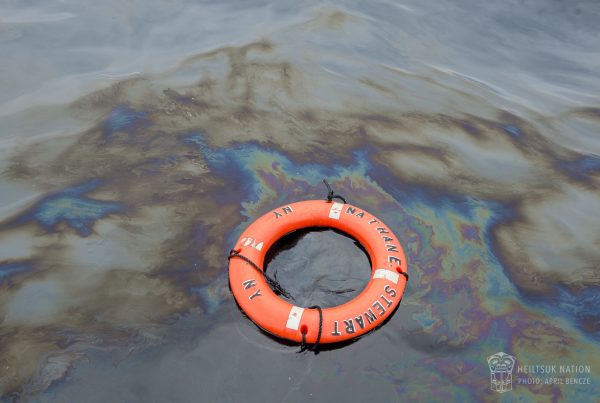
There is a term the Canadian government and large multinational corporations have been using recently: “critical infrastructure.” It is heard uttered from the mouths of government officials or CEO’s every time a new mine, pipeline, or highway gets fast-tracked through environmental review. It is the idea that some projects are simply too important – too critical – to the economy to slow down for things like consultation, consent, or environmental assessment.
A new report from the Infrastructure Beyond Extractivism (IBE) project, called Holding Ground, asks a simple but pointed question: what exactly is critical infrastructure and who is it critical to?
“Holding Ground” in a nutshell
The report’s core claim is that Indigenous jurisdiction — the ongoing, everyday work Indigenous nations do to govern their own lands, waters, and communities — isn’t a nice-to-have or a roadblock to progress. It is critical infrastructure. The report argues Indigenous jurisdiction is far more critical than another fast-tracked highway or pipeline, since it’s what actually sustains the people, ecosystems, and relationships that make a place livable in the first place.
That’s a direct challenge to how “critical infrastructure” is currently conceived. The report argues that the current framing of infrastructure has always served the economy first and people and their environments second, and that it has a long, specific history of doing real harm to people and places.
So what happens to all of that infrastructure now?
A huge amount of Canada’s colonial-era extractive infrastructure, which includes logging roads, old rail corridors, and abandoned mines, is no longer serving anyone. The report asks: could that infrastructure be reclaimed and repurposed by the Indigenous nations whose land it was built on, this time on their own terms?
A few real examples the report points to:
- Roads: In Ontario, there are more than 19,500 kilometres of access roads originally built for logging and mining. Many crisscross Indigenous territory, disrupting it, while remaining unavailable for the communities who actually live there to use for their own vital purposes. The report asks what it would look like to redesign that same road network around Indigenous authority and community needs instead.
- Railways: In northern Manitoba, three Cree and First Nations communities — Tataskweyak Cree Nation, Mathias Colomb Cree Nation, and War Lake First Nation actually did this: in 2006, they purchased an abandoned rail line and turned it into the Keewatin Railway Company, now fulfilling real transportation needs and access to remote communities, owned and run by the nations themselves rather than a private company.
- Mines: Canada has roughly 10,000 abandoned mine sites, many still holding valuable leftover minerals in their waste piles. These so-called “critical minerals” could be recovered from the waste – in theory preventing the digging of new holes and the discretion of more lands and waters. The report argues that those sites could be cleaned up, and if any “value” is extracted form them, Indigenous nations on whose land the original mining happened, and who bore the resulting environmental harm, should be the ones leading that work and benefiting from it.
Why now?
The report lands at a tense political moment. Canada is currently fast-tracking major infrastructure and critical minerals projects. This is partly in response to U.S. tariffs, under the banner of economic urgency and “national security.” We argue this is pulling the country back toward the same colonial, extractive approach: instead we need to hold our ground.
The report does not suggest abandoning infrastructure altogether, but rather to think about infrastructure differently. We ask: infrastructure for whom, and under whose authority? The report’s title, Holding Ground, is meant to capture both meanings at once: the long struggle Indigenous nations constantly inherit simply to keep their relationship to the land intact, and the opportunity, right now, to turn some of the infrastructure that once worked against that relationship into something that instead supports it.