As Earth Day approaches, Canada faces a difficult but necessary question: What is the value of a climate promise if there is no meaningful way to hold governments accountable for keeping it?
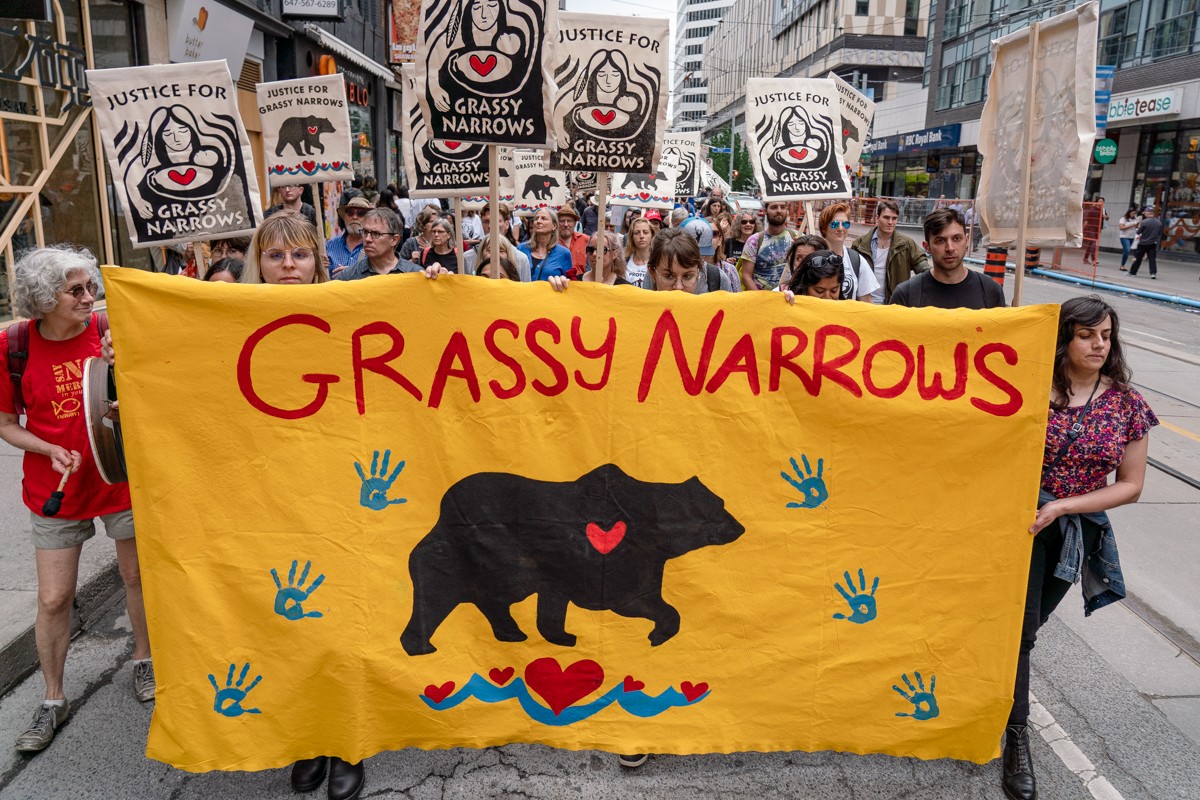
On April 27th, two House groups from the Likhts’amisyu Clan of the Wet’suwet’en people will appear in court to oppose the federal government’s third attempt to strike their landmark case, Misdzi Yikh v. Canada. First filed in 2020, the case asks whether Canada’s failure to adequately reduce greenhouse gas emissions violates the Houses’ constitutional rights and whether governments can be held accountable for climate commitments they have made.
At its core, this case is about a widening gap between what Canada promises and what it delivers.
A Gap Between Commitments and Reality
In 2015, Canada joined nearly every country in adopting the Paris Agreement, committing to limit global warming to well below 2°C above pre-industrial levels. These targets are grounded in science and reflect the scale of harm that can still be avoided. Yet Canada remains far from meeting them.
In 2023, emissions reached 694 megatonnes of CO₂ equivalent—well above the 2030 target of 419–457 megatonnes. The federal government has clear authority to regulate these emissions through legislation and project approvals. However, the Environment Commissioner has already concluded that current policies are insufficient. Despite repeated commitments, Canada is not on track.
Climate Change as a Rights Issue
The case centres on a powerful legal claim: that inadequate climate action can violate fundamental rights under the Canadian Charter. Section 7 guarantees the right to life, liberty, and security of the person. Climate change directly threatens these rights. Across the country, communities are already experiencing intensifying wildfires, extreme weather, and disruptions to food and water systems.
For Indigenous communities, these impacts are often more immediate and severe. Cultural practices, governance, and livelihoods are deeply tied to lands, waters, and ecosystems. When those systems are destabilized – as have, for example, Wet’suwet’en salmon stocks – the consequences extend beyond environmental damage—they affect safety, health, and continuity of community life.
The case asks whether government inaction in the face of these known risks is consistent with constitutional protections. It does not ask the court to design climate policy. It asks whether there are legal limits to how far governments can fall short when constitutional rights are at stake.
Grounded in Wet’suwet’en Law
What makes this case distinct is that it is grounded not only in Canadian law but also in Wet’suwet’en law. These laws predate Canada and continue to govern responsibilities to land and community. Under them, House groups are obligated to protect their territories and act when harm occurs. These responsibilities extend across generations.
The decision to bring this case reflects those responsibilities. It is an assertion that Indigenous law continues to guide action and that it demands accountability when harm is occurring. From this perspective, climate change is not abstract. It is a direct threat to the lands and waters they are responsible for stewarding.
Avoiding the Merits
So far, the federal government has not defended its climate record in a full hearing of this case. Instead, it has attempted three times to strike out the case before it can proceed. A motion to strike does not test the evidence. It argues the case should not be heard at all. In this instance, the government has suggested the issues are too complex or political for courts.
But courts regularly deal with complex questions, especially where rights are involved. As climate impacts intensify, the legal dimensions of government responsibility are becoming harder to ignore. Seeking to avoid a full hearing risks reinforcing the perception that the federal government is indifferent to the gap between climate commitments and action.
Why This Case Matters
The outcome of the April 27th hearing will determine whether the case proceeds, but its significance is broader. If allowed to move forward, it will help establish that climate commitments carry legal weight. It will determine if governments are legally required to align their actions with the targets they set—particularly where failure to do so risks infringing fundamental rights.
This would affirm a principle: commitments tied to preventing serious harm must be implemented, not simply announced.
It also highlights the leadership of Indigenous peoples, whose legal traditions emphasize stewardship, responsibility, and long-term thinking in ways that are increasingly relevant in a warming world.
A Moment for Collective Action
As Earth Day this year invites reflection on our collective responsibilities, this case asks us: when governments make promises about the future of the planet, who ensures those promises are kept? The answer may help define not only Canada’s climate path, but its commitment to justice itself.
When Indigenous leaders must go to court to seek action that has been promised and which will benefit every living being on Earth, we have a collective responsibility to stand with them. That’s why we are inviting the public to pledge their support for their leadership this Earth Day.