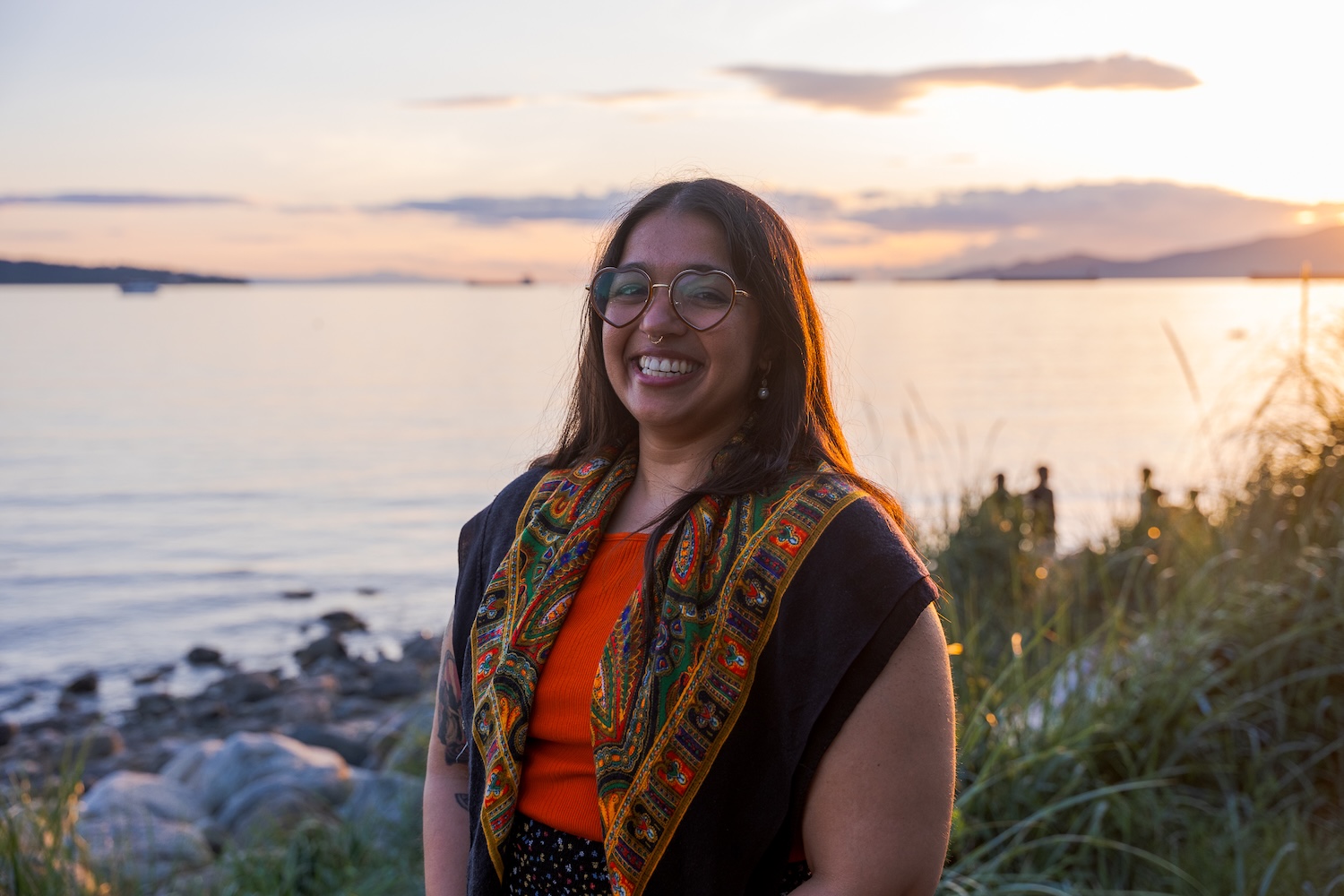
RAVEN is excited to introduce you to Hersharon Sundarke, our new Campaigns Organizer based on Treaty 6 territory. Bringing in a wealth of personal and professional experience, Hersharon is a writer and community organizer whose work explores the intersections of nature, community, and belonging. With over eight years of experience in fundraising, community engagement, and project coordination across the non-profit and post-secondary sectors, she has spent much of her career bringing people together around shared causes. Read on to learn more about what drew Hersharon to RAVEN, what skills they are bring to the job, and how community is at the centre of everything they do.
What drew you to working with RAVEN?
My journey toward conservation started when I visited Big Lonely Doug on Pacheedaht Territory. Standing in front of the ancient tree, which has survived and witnessed so much, primarily through volunteer-led efforts, made it clear that I wanted my career to be connected to land protection.
In exploring conservation-focused work, I kept coming back to questions about how land and water are protected in practice, and who has the ability to make decisions about them. That’s what led me to RAVEN.
RAVEN’s work focuses on supporting Indigenous Nations through legal fundraising so they can defend their rights, lands, and waters. It’s a practical intervention in a system where the resources on each side are largely unbalanced. Supporting Nations in this space felt like a meaningful and concrete way to contribute to land protection.
When the opportunity to work as a prairie-based Campaigns Organizer came up, I was ready for it. I’ve been a settler in Amiskwacîwâskahikan since 2006, and this role connects to a long thread in my life of building community and bringing people together around shared causes.
What is your favourite part of the job so far?

Learning directly from Partner Nations has been the most meaningful part so far. Each campaign carries a significant depth of work, and Nations are often working on multiple critical initiatives at once to address the environmental and cultural harms affecting their communities. These conversations shape how I think about my role and what it means to support Nation-led work in a responsible way.
I’ve also really appreciated getting to know the team. There’s a strong sense of focus and a shared understanding of how and why people show up to the work, which makes it easier to stay grounded in what we’re all trying to support.
Is there anything else that you are bringing to your position that you are excited to integrate into your work at RAVEN? Whether from your career experience or personal life experience?
In many ways, this work feels like something I’ve been doing in different forms throughout my life. I was born in Mumbai, India, where community was central to everyday life. After my family immigrated and settled in Amiskwacîwâskahikan, much of my life has been about rebuilding that same sense of connection in new places and contexts.
That has shown up in different ways over the years — supporting LGBTQIA2S+ safe spaces in university, hosting online gatherings during the COVID-19 pandemic, running donation and swap drives, facilitating tabletop gaming spaces, and creating spaces of connection and rest for people when needed.
Professionally, I bring over a decade of experience in nonprofit fundraising, donor engagement, and campaign coordination. My 18-year career has centred on relationships: how they’re built, maintained, and supported over time through clear communication and trust.
At RAVEN, I’m excited to apply those skills in direct support of Indigenous Nations advancing legal challenges and defending their rights. I’m also focused on keeping campaign work practical, respectful, and closely tied to what Nations are prioritizing.
What does Indigenous sovereignty mean to you or look like to you?

Indigenous sovereignty is the inherent right of Indigenous Nations to govern themselves, make decisions for their communities, and protect their lands, waters, languages, and laws.
It also means recognizing that these responsibilities and rights are not something granted by colonial systems. They exist independently, are longstanding, and will continue to exist regardless of whether they are upheld within colonial legal systems. Supporting sovereignty means making space for those realities to be respected in how decisions are made and carried out. It’s about ensuring that Indigenous rights, law, and voices are respected in practice, including in courts, policy, and governance.
What makes you feel connected to the land or water? Do you have any practices that keep you grounded in the natural world?
Being outside is an integral part of my daily practice; it’s how I stay grounded in my values and my sense of purpose. Time near or on water, walking through the river valley on Treaty 6 Territory, or spending time hiking and camping in the backcountry and mountains helps me reset and stay present.
I try to keep this practice simple and consistent. Walking without distractions and paying attention to the land as it changes through the seasons helps me maintain perspective and stay connected to place. I often travel with a small notebook and coloured pencils to sketch or journal what I notice. With summer around the corner, I’m looking forward to caring for our backyard garden crops and flowers.
What’s something that brought you joy in the last year?

Community has been a consistent source of joy for me over the past year. My close-knit Dungeons & Dragons group recently passed the 3-year mark, which has been a meaningful milestone. This has been an important space for connection, storytelling, and support for me, and I’m overjoyed that seven 30-something adults are able to create space for this despite busy calendars and lives. It has reinforced the value of showing up regularly for people and is a good reminder that relationships don’t need to be big or formal to be sustained; they just need consistency.
Is there anything else you want the RAVEN community to know or any message you want to share with our supporters?
I’m grateful to have joined RAVEN and to be a part of work that so many people care deeply about. The support that exists around these campaigns plays a direct role in enabling Indigenous Nations to pursue legal action and defend their rights.
To everyone who supports RAVEN — through donations, sharing campaigns, or broader advocacy — thank you! Your solidarity is what makes this work possible, and I don’t take that lightly.
This work can feel heavy at times, especially when the systems involved are complex and uneven. What makes it sustainable is the community around it, and I’m glad to be a part of that effort.