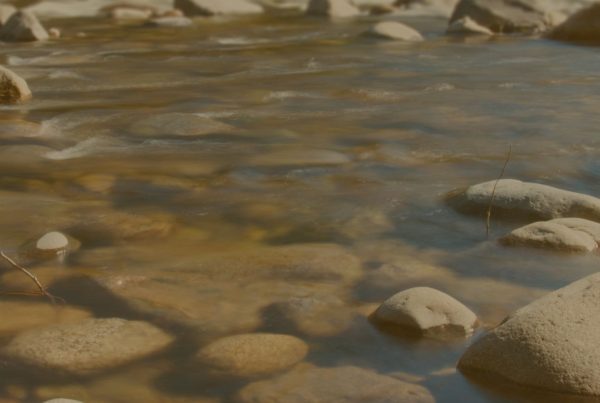
Twisting and flowing, the river whispers stories from the land if you take a moment to sit and listen. Each droplet, a precious piece of knowledge, nourishment, and life. Her waters run across the earth’s surface, branching into veins and arteries and capillaries, serving the same purpose as the blood that rushes beneath our skin to keep us alive.
The protection of these waters is of the utmost importance. The plants that grow in and around her streambeds, the animals that swim in her waters and drink from her shores and float on her surface, and the people who gather, play, and hunt on, in, and around her rely on the river for their survival. We are not separate from the river but deeply interconnected. And any harm that comes to her comes to us as well; we cannot forget that.
Three RAVEN-supported legal cases know this at their core: protecting the rivers is inextricable from protecting each other. Athabasca Chipewyan First Nation, Grassy Narrows First Nation, and Kebaowek First Nation are all pursuing legal cases that are spurred by the knowledge and responsibility they hold to care for the land and for each other. These First Nations are taking action to hold colonial systems accountable and unravel the harms and wrongs done to them and the land so we can all have a better future.
The Athabasca River and Athabasca Chipewyan First Nation
Athabasca Chipewyan First Nation have harvested food, hunted, fished, trapped, and used water from the Athabasca River for thousands of years. When toxic tailings spilled into the Firebag River Corridor, which flows into the Athabasca River, from the Kearl Facility upstream, the Alberta Energy Regulator chose not to inform Athabasca Chipewyan First Nation for nine months. Nine months, during which the Nation continued to harvest and use water from the river that they thought was safe for their families, their children, and their Elders.
The discharges are not isolated incidents, but signs of a greater systemic failure. So, Athabasca Chipewyan First Nation is taking the Alberta Energy Regulator to court. Through their legal action, Athabasca Chipewyan First Nation wants to see regulatory reform, secure compensation for damages, and ensure meaningful recognition of Indigenous law and governance.
The English-Wabigoon River System and Grassy Narrows First Nation
The waters of the English-Wabigoon River system take us to Grassy Narrows First Nation, who recently traveled 1,700 km to Toronto for the 2026 River Run Rally, where they demanded justice for the mercury contamination of their life-giving river. Over 50 years ago, a pulp mill discharged nine metric tonnes of inorganic mercury into the river, contaminating the fish Grassy Narrows relies on for sustenance as a remote community, and as cultural and spiritual food. To this day, 90% of tested community members experience symptoms of mercury poisoning, which has wide-ranging impacts on the nervous system and other organs.
Decades later, the governments of Canada and Ontario have still not cleaned up the river. Their legal challenge is taking the Canadian and Ontario governments to court to demand three things: compensate Grassy Narrows First Nation for the impact of the mercury crisis on their community, take action to clean up the river, and uphold and respect their Treaty rights instead of authorizing industry to continue destroying their lands and waters, making the mercury crisis worse.
The Kichi Sibi and Kebaowek First Nation
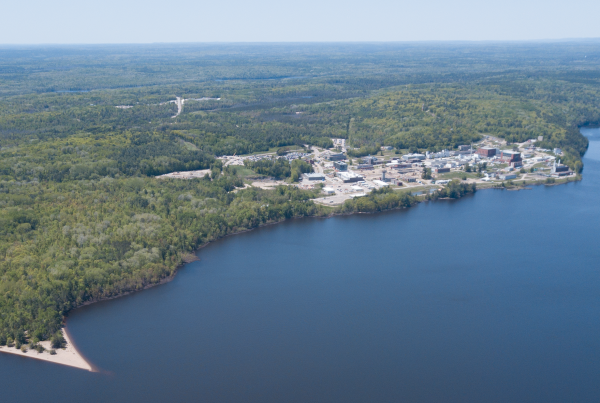
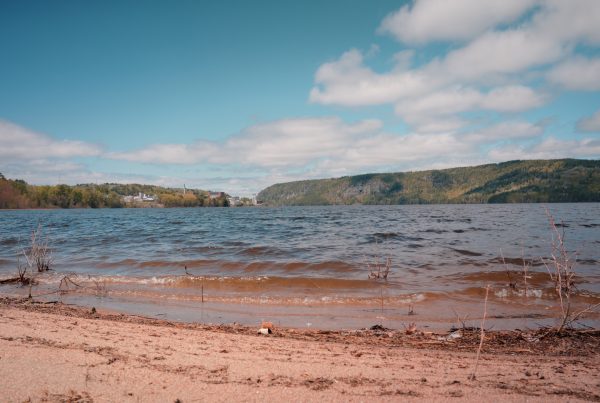
Along the banks of the Kichi Sibi (Ottawa River), you’ll find Kebaowek First Nation, who have hunted, fished, trapped, and harvested on their territory since time immemorial. The Kichi Sibi brings life to all who live near, on, and in it. There are endangered lake sturgeons, eels, and Hickorynut mussels that call its waters home, beavers who build dams along its banks, and black bears who hibernate along its sandy shores. Downstream, the Kichi Sibi provides drinking water to millions of people in Ontario and Quebec.
However, this beautiful watershed is at risk because of a near-surface nuclear disposal facility proposed by Canadian Nuclear Laboratories and approved by the Canadian Nuclear Safety Commission without the free, prior, and informed consent of Kebaowek First Nation. Time and time again, industry and governments ignore the free, prior, and informed consent of Indigenous Nations, a clear violation of the United Nations Declaration on the Rights of Indigenous Peoples, in favour of projects that destroy and contaminate the environment. With their legal challenge, Kebawoek First Nation is challenging a decision of the Canadian Nuclear Safety Commission in court to protect the sacred Kichi Sibi. They are currently awaiting a decision from the Federal Court of Appeal on free, prior, and informed consent.
The Rivers Connect Us, The Laws Should Protect Us
Athabasca Chipewyan First Nation, Grassy Narrows First Nation, and Kebaowek First Nation are taking these legal actions because they do not have a choice. The impact of industry and governments on the environment is directly and deeply felt by their communities. Harm to the rivers is harm to the people who have lived on the land, who currently live on the land, and who will live on the land for generations to come. These legal challenges are seeking to remediate past harms and are looking to a future where Indigenous rights are upheld and respected. The outcomes of these cases will create a ripple effect, with precedents set that will protect other communities. From the Athabasca River to the English-Wabigoon to the Kichi Sibi, these waters flow through us all, and we are all responsible for their protection. Stay connected to these legal cases and more by signing up for our newsletter here. Water is life.